

Mastering Twi Tones: How Onua Digital Library Makes Learning Twi Easier
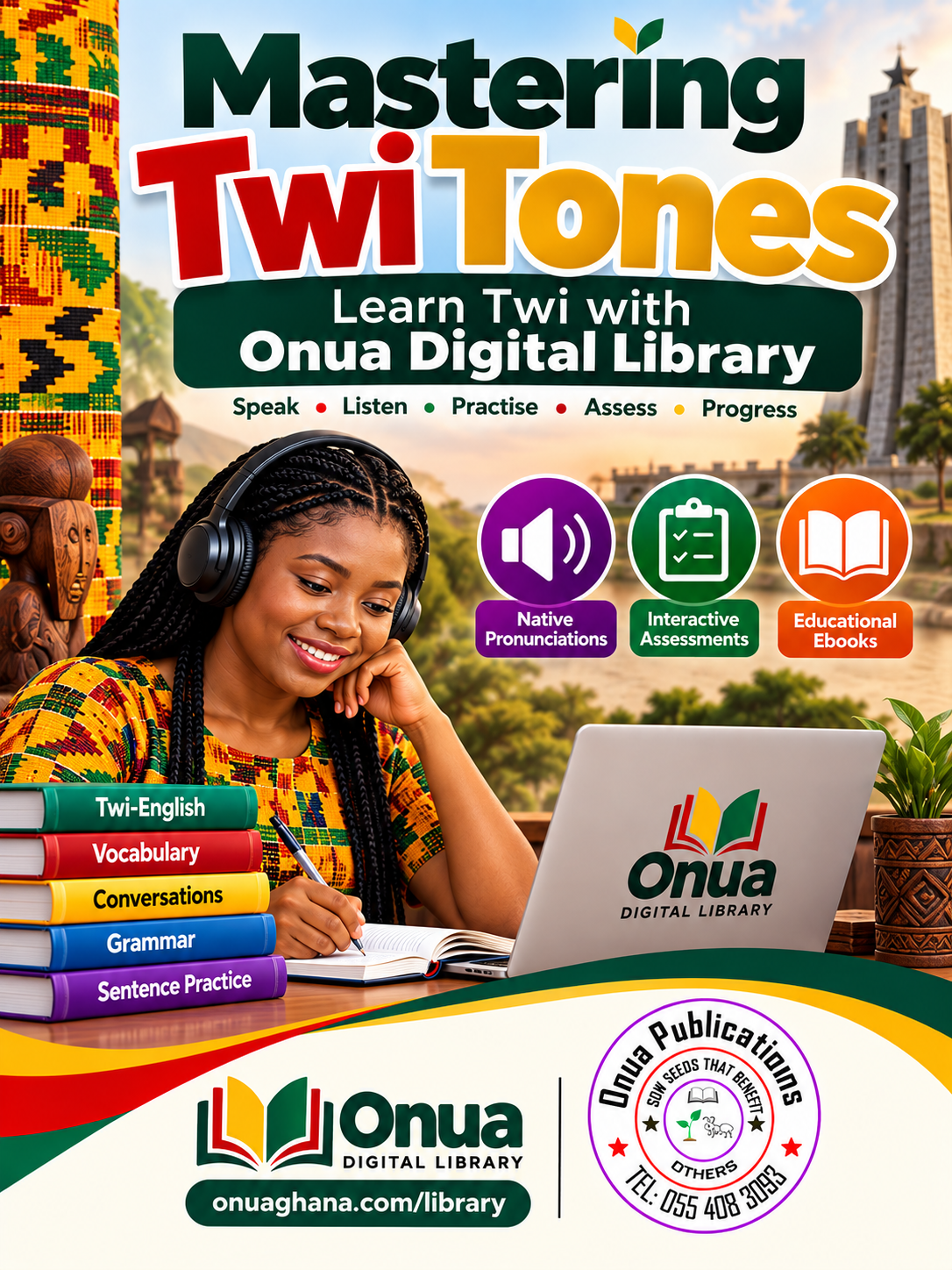
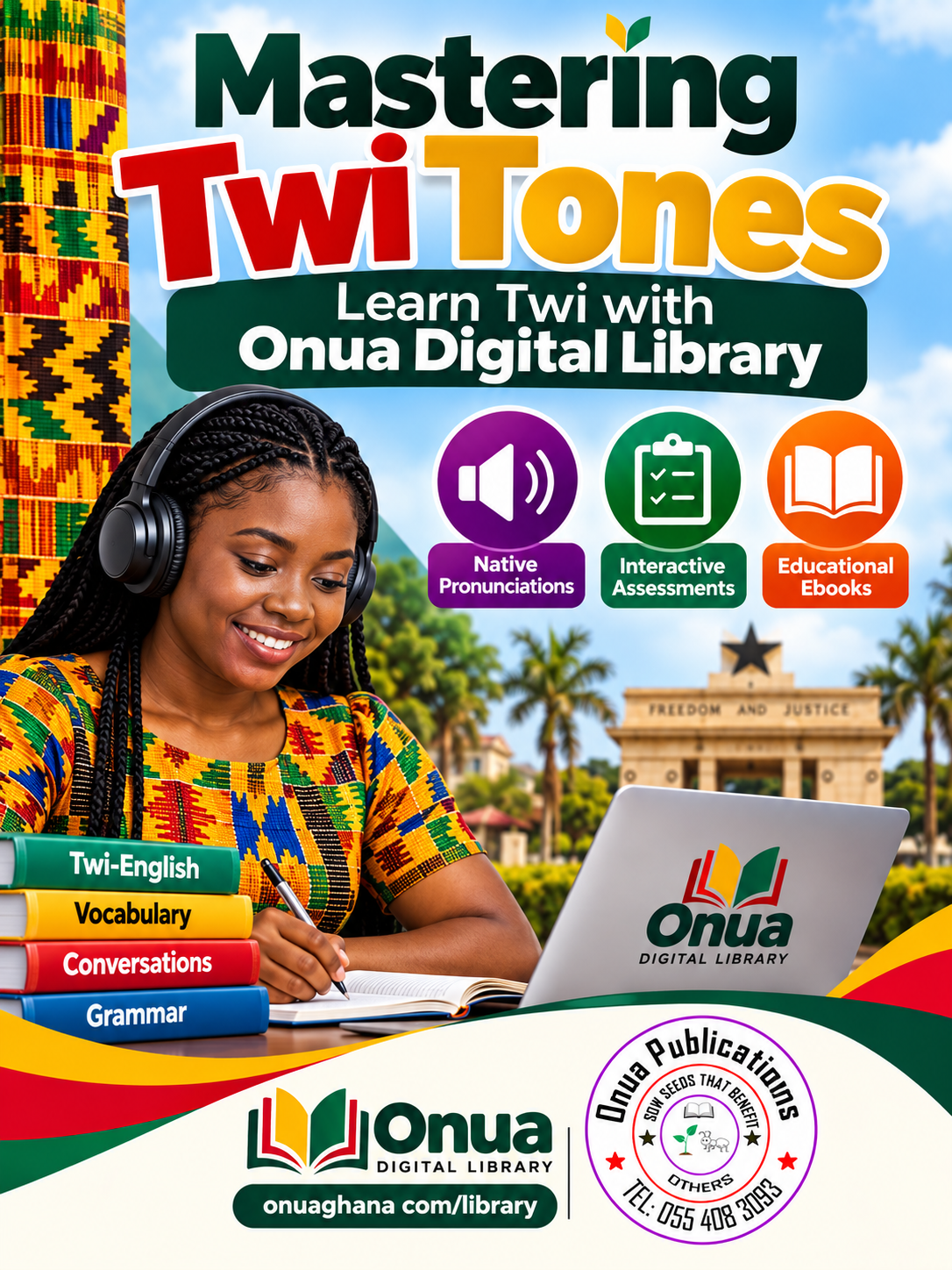
Learning Twi is more than memorising words and translating sentences. To speak the language naturally and communicate effectively, learners must understand pronunciation, tone, listening, and sentence construction. One of the most important challenges for beginners, foreigners, and Ghanaians in the diaspora is mastering Twi tones. Onua Digital Library addresses this challenge through native pronunciations, interactive assessments, and educational ebooks designed to support practical language learning.
Learn Twi | Twi Phonics | Alphabet | Online
Understanding the Importance of Tone in Twi
Twi is a tonal language. This means that the pitch of the voice can influence the meaning of a word. Two words may have similar or identical written forms but differ in meaning or grammatical function because of their tones. Consequently, pronouncing a word with the wrong tone can make a learner difficult to understand or communicate a different meaning from the one intended.
For learners whose first languages are English or other non-tonal languages, recognising these pitch differences can be particularly challenging. English speakers often concentrate on consonants, vowels, spelling, and sentence stress without paying sufficient attention to the tonal patterns of Twi.
Reading a Twi word correctly, therefore, does not automatically mean that a learner can pronounce it correctly. Learners need to hear authentic speech, practise pronunciation repeatedly, and receive opportunities to assess their understanding.
Learn Twi: Two-Letter Words with Audio & Assessment | Free
How Onua Digital Library Resolves the Challenge
1. Native Twi Pronunciations
Onua Digital Library helps learners connect written Twi with spoken language through native pronunciations. Instead of relying exclusively on written descriptions or English-based pronunciation approximations, learners can listen to Twi words and expressions as spoken by native speakers.
This approach helps learners become familiar with vowel quality, consonant articulation, syllable patterns, and tonal distinctions. By listening carefully and repeating words and sentences, learners can gradually improve their pronunciation and listening comprehension.
Repeated exposure also helps learners recognise familiar expressions in everyday conversations. This is especially valuable for beginners who have limited opportunities to practise with fluent Twi speakers.
Conversational Twi for Beginner | Foreigners | Ghanaian in Diaspora | Free
2. Assessments That Reinforce Learning
Listening alone is not always sufficient. Learners must also test what they have understood. Assessments provide an opportunity to review vocabulary, recognise correct answers, practise language patterns, and identify areas requiring further attention.
Through assessment-based learning, students can evaluate their understanding of lessons and reinforce previously studied material. Carefully structured exercises can support the recognition of tonal contrasts, word meanings, translations, and sentence usage.
The combination of listening, practice, and assessment encourages active participation rather than passive reading. Learners can use the results of their exercises to decide which topics deserve additional practice.
3. Ebooks for Structured Learning
Onua Digital Library also supports Twi learning through educational ebooks. These resources provide structured written lessons that learners can study at their own pace, revisit when necessary, and use alongside pronunciation practice.
Twi-English bilingual ebooks are particularly useful because they present Twi expressions with English translations. Learners can expand their vocabulary, understand sentence construction, study everyday conversations, and develop confidence in reading.
Ebooks also make it easier to organise learning progressively, beginning with foundational vocabulary and simple expressions before moving towards more complex sentences and conversations.
A Practical Learning Method
For the best results, learners should combine these resources in a consistent routine. First, read a Twi word or sentence and understand its meaning. Second, listen to its native pronunciation and pay attention to the speaker's pitch and sound patterns. Third, repeat the expression aloud several times. Fourth, complete the relevant assessment to check comprehension. Finally, revisit the ebook lesson and practise the expression in a new sentence.
This process connects reading, listening, speaking, and assessment. It also encourages learners to develop habits that support long-term language retention.
Start Learning Twi with Onua Digital Library
Mastering Twi tones requires patience, consistent listening, and regular practice. With native pronunciations, assessments, and bilingual educational ebooks, Onua Digital Library provides a practical learning environment for people who want to understand and speak Twi with greater confidence.
Whether you are a beginner, a foreign learner, or a Ghanaian living abroad who wants to reconnect with the language, Onua Digital Library can support your learning journey.
Visit onuaghana.com/library to explore Twi learning resources and take the next step towards understanding, speaking, and appreciating the richness of the Twi language.