
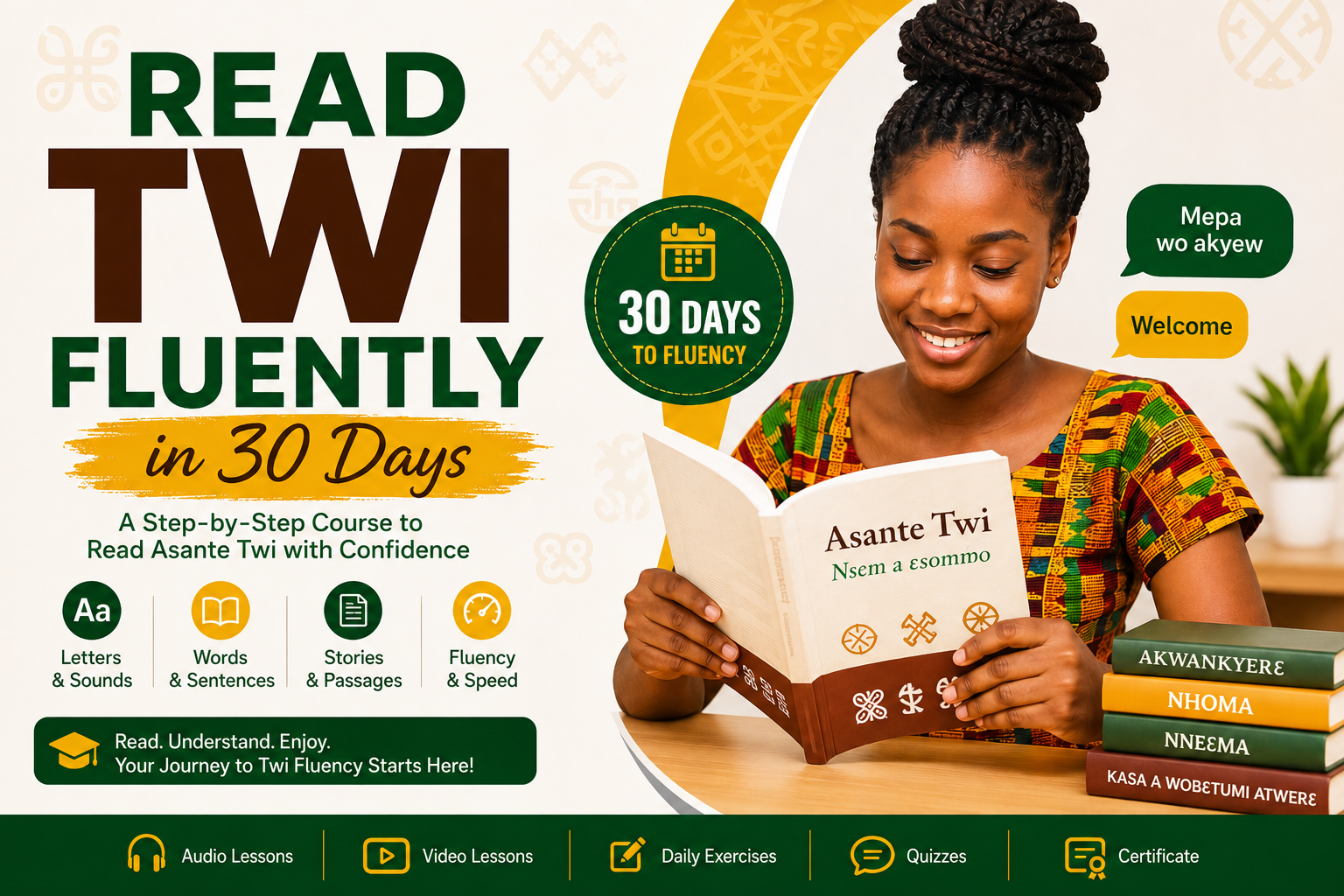
Learning Twi does not have to be difficult. The key is to take one step at a time. Instead of trying to learn everything at once, focus on one lesson each day. By the end of these 20 lessons, you will have a strong foundation for speaking and understanding everyday Twi.
Lesson 1: Greetings
Learn how to greet people politely.
Examples:
- Maakye — Good morning.
- Maaha — Good afternoon.
- Maadwo — Good evening.
- Wo ho te sɛn? — How are you?
- Me ho yɛ. — I am fine.
Lesson 2: Introducing Yourself
Learn how to tell people who you are.
Examples:
- Me din de Kofi. My name is Kofi.
- Mefiri Ghana. I am from Ghana.
Lesson 3: Numbers
Learn to count from one to ten.
- baako — one
- mmienu — two
- mmiɛnsa — three
- nnan — four
- nnum — five
- nsia — six
- nson — seven
- nwɔtwe — eight
- nkron — nine
- du — ten
Lesson 4: Family
Learn common family words.
- -agya — father
- ɛna — mother
- ba — child
- nua — sibling
- abusua — family
Lesson 5: Food
Useful food vocabulary.
- aduan — food
- nsuo — water
- brodo — bread
- ɛmo — rice
- nkyene — salt
Lesson 6: Home
Words used around the home.
- fie — home
- dan — room
- pono — table
- akonnwa — chair
- ɛpono — door
Lesson 7: School
Useful school vocabulary.
- sukuu — school
- nwoma — book
- pensere — pencil
- kyerɛkyerɛni — teacher
- osuani — student
Lesson 8: Colours
Learn common colours.
- fitaa — white
- tuntum — black
- kɔkɔɔ — red
- bruu — blue
- bibire - blue
- ahabammono — green
Lesson 9: Days of the Week
- Learn the names of the days.
- Practise saying each day aloud and using it in simple sentences.
Lesson 10: Months of the Year
- Learn the names of the twelve months in Twi.
Lesson 11: Weather
Useful weather expressions.
- Owia repue The sun is rising.
- Osuo retɔ. It is raining.
Lesson 12: Shopping
Useful shopping phrases.
- Wei boɔ yɛ sɛn? How much is this?
- Mepɛ sɛ metɔ wei. I want to buy this.
Lesson 13: Travelling
Useful travel expressions.
- Merekɔ Kumasi. I am going to Kumasi.
- Kwan no wɔ he? Where is the road?
Lesson 14: Asking Questions
Learn to ask simple questions.
- Hwan? Who?
- Dɛn? What?
- He? Where?
- Berɛ bɛn? When?
- Adɛn? Why?
Lesson 15: Common Verbs
Examples:
- di — eat
- nom — drink
- kɔ — go
- ba — come
- sua — learn
Lesson 16: Everyday Sentences
Examples:
- Mepɛ nsuo. I want water.
- Merekɔ fie.
- I am going home.
- Me ho yɛ. I am fine.
Lesson 17: Polite Expressions
Learn expressions you will use often.
- Meda wo ase. Thank you.
- Mepa wo kyɛw. Please.
- Kosɛ. Sorry.
Lesson 18: Reading Practice
Read short Twi stories every day. Reading improves your vocabulary and helps you understand sentence patterns.
Lesson 19: Listening Practice
Listen to native speakers through conversations, songs, and videos. Repeat what you hear to improve your pronunciation.
Lesson 20: Daily Practice
Spend at least 15 to 30 minutes practising Twi every day. Review old lessons, learn new words, and speak as often as possible.
Tips for Success
- Learn a few new words every day.
- Read Twi aloud.
- Listen carefully to native speakers.
- Practise speaking without fear.
- Review previous lessons regularly.
- Keep a notebook of new vocabulary.
Frequently Asked Questions
Can I finish these lessons in 20 days?
Yes. Completing one lesson each day is a good pace for most beginners.
What should I do after these lessons?
Continue learning longer conversations, stories, grammar, and vocabulary to improve your fluency.
Is daily practice important?
Yes. Even 15 minutes of daily study will help you make steady progress.
Conclusion
These 20 easy lessons provide a solid foundation for learning Twi. Start with greetings, build your vocabulary, practise useful sentences, and use the language every day. With patience and regular practice, you will soon be able to understand and speak everyday Twi with confidence.
For more Twi–English lessons, stories, vocabulary lists, and learning resources, visit onuaghana.com.